
IOSA Safety Assessment: 2025 Aviation Trends for Airlines
The latest accident data shows why IOSA safety assessment, SMS effectiveness review, and structured operational risk evaluation remain essential for airlines.
An effective IOSA safety assessment helps airlines move beyond documented compliance and focus on the real drivers of operational safety performance. The 2025 accident data published by IATA shows that while the global accident rate improved slightly compared with the previous year, fatality risk increased and several recurring event categories continued to underline the need for stronger safety oversight, better implementation evidence, and more mature Safety Management Systems.
For airline executives, safety managers, compliance leaders, and quality departments, the message is clear: safety improvement requires better risk visibility, disciplined implementation, effective internal controls, and regular assessment of how standards are working in practice.
Key Aviation Safety Facts from the 2025 Data
Global Accident Rate
The global accident rate in 2025 was 1.32 accidents per million sectors, improving from 1.42 in 2024.
Total Accidents
A total of 51 accidents were recorded in 2025, compared with 54 in the previous year.
Fatality Risk
Fatality risk increased to 0.17 in 2025 from 0.06 in 2024, showing why severity analysis matters.
IOSA Performance
IOSA carriers reported an accident rate of 0.98, while non-IOSA carriers reported 2.55.
Why IOSA Safety Assessment Matters in 2025
The 2025 data reinforces the practical value of a strong IOSA safety assessment. IOSA should not be treated only as an external audit requirement. It is a structured operating framework that supports governance, operational discipline, risk control, evidence traceability, and cross-functional accountability.
According to the report, IOSA-registered operators continued to perform better than non-IOSA operators in overall accident rates. Over the 2021–2025 period, the IOSA accident rate averaged 0.92 compared with 2.40 for non-IOSA operators. That long-term difference strengthens the case for airlines to invest in mature audit preparation and effective implementation rather than last-minute compliance exercises. :contentReference[oaicite:0]{index=0}
This is particularly relevant for operators preparing for:
- IOSA renewal audits
- initial IOSA registration
- risk-based IOSA transition work
- internal safety and quality maturity assessments
- regulatory and customer oversight reviews
IOSA Safety Assessment and Aviation Safety Trends
Although overall accident frequency improved slightly in 2025, the year still recorded 8 fatal accidents and 394 onboard fatalities. This confirms that safety reviews must examine not only how often events occur, but also how severe they become when controls fail. :contentReference[oaicite:1]{index=1}
Several operational categories remained important across the dataset, including:
- tailstrike events
- landing gear events
- runway excursions
- hard landings
- ground damage
- in-flight damage
- controlled flight into terrain (CFIT)
- loss of control in-flight
- mid-air collision
The report’s accident-category analysis also indicates that Other End State, Loss of Control In-flight, and Controlled Flight Into Terrain (CFIT) remain especially important from a fatality-risk perspective over the multi-year period. :contentReference[oaicite:2]{index=2}
For airline safety departments, this means that a robust safety assessment should connect occurrence data with operational processes, crew training, engineering controls, safety reporting quality, and management oversight effectiveness.
Regional Safety Risks and IOSA Preparation Priorities
The data also shows regional differences in safety outcomes. Some regions recorded very low accident rates, while others showed materially higher rates. Regional performance should always be interpreted carefully, considering fleet mix, route exposure, infrastructure, oversight maturity, operating environment, and investigation-report quality.
In 2025, North Asia recorded an accident rate of 0.16, the Middle East 0.53, Asia Pacific 0.91, Europe 1.30, North America 1.68, and Africa 7.86. :contentReference[oaicite:3]{index=3}
| Region | 2025 Accident Rate |
|---|---|
| North Asia | 0.16 |
| Middle East | 0.53 |
| Asia Pacific | 0.91 |
| Europe | 1.30 |
| North America | 1.68 |
| Africa | 7.86 |
Regional variation does not automatically mean that one region is “safe” and another is “unsafe.” It often reflects a combination of exposure patterns, aircraft mix, infrastructure, regulatory oversight maturity, and local operating context. That is why IOSA preparation priorities should be tailored to the airline’s specific risk profile rather than treated as a generic checklist.
How IOSA Safety Assessment Improves Audit Readiness
A practical IOSA safety assessment should help airlines identify what is missing, what is weak, and what is not yet effectively implemented. Good preparation work translates standards into working controls and verifiable evidence.
Typical support activities include:
- IOSA gap analysis and evidence mapping
- documentation alignment against ISAR requirements
- Safety Management System maturity review
- internal audit and compliance monitoring improvement
- corrective action plan development
- management review and governance support
- mock audit preparation and operational coaching
IOSA Safety Assessment for Airline Risk Review
Airlines that use IOSA as a management tool rather than only an audit milestone are better positioned to identify weak controls early, prioritize higher-risk areas, and improve operational consistency across departments.
Aviation Safety Consulting for IOSA Preparation
Structured consulting support can help airlines convert findings, evidence gaps, process weaknesses, and implementation inconsistencies into practical corrective actions that improve both compliance and real operational safety.
Useful Industry References
The following industry resources are useful for airlines reviewing audit readiness, SMS expectations, and current safety trends:
Related Reading
Frequently Asked Questions
What is an IOSA safety assessment?
An IOSA safety assessment is a structured review of an airline’s operational conformity, implementation evidence, safety controls, documentation, and management systems against IOSA requirements and industry good practice.
Why does IOSA matter for airline safety performance?
IOSA matters because it provides a structured operational framework that strengthens oversight, discipline, and implementation quality. The 2025 accident data again showed lower accident rates for IOSA carriers than for non-IOSA operators.
What does aviation safety consulting include?
Aviation safety consulting typically includes audit preparation, gap analysis, SMS effectiveness review, documentation alignment, evidence mapping, corrective action planning, compliance monitoring support, and regulator-ready implementation improvement.
How can a safety assessment help airlines?
A safety assessment helps airlines identify recurring risk areas, implementation weaknesses, documentation gaps, and management-control issues before they result in audit findings, authority concerns, or operational events.
Conclusion
The 2025 safety data confirms that strong systems matter. Airlines that invest in audit readiness, effective implementation, risk-based oversight, and operational evidence are better positioned to reduce accident exposure and improve resilience.
A focused IOSA safety assessment, combined with practical safety management review and disciplined follow-up action, can help turn standards into measurable safety performance improvement.
Preparing for IOSA, ISAGO, EASA TCO, UK CAA TCO or Part-145 approval?
Aero Support Group supports airlines, MROs, airports and aviation organizations worldwide with regulatory compliance,
audit preparation and aviation safety implementation aligned with ICAO, IATA, EASA, UK CAA and FAA requirements.
Aviation Safety Consulting and Compliance Support
Aero Support Group supports airlines, airports, MROs and aviation service providers worldwide with regulatory compliance,
audit preparation and safety implementation programs aligned with ICAO, IATA, EASA and FAA requirements.
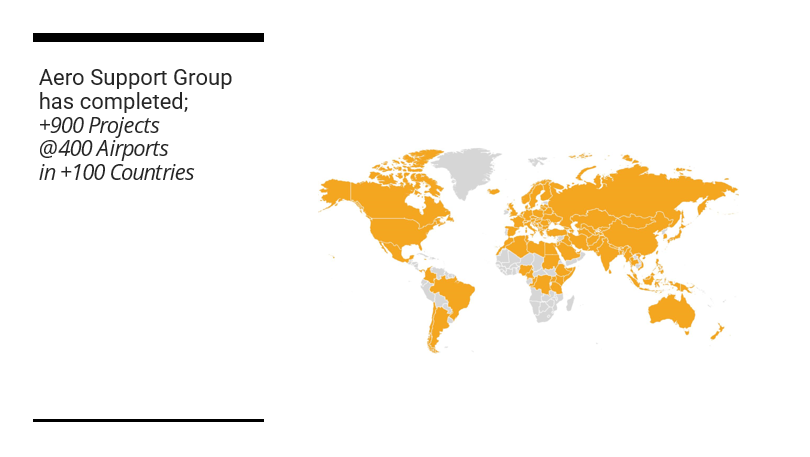
Supporting aviation organizations across more than 100 countries worldwide. |
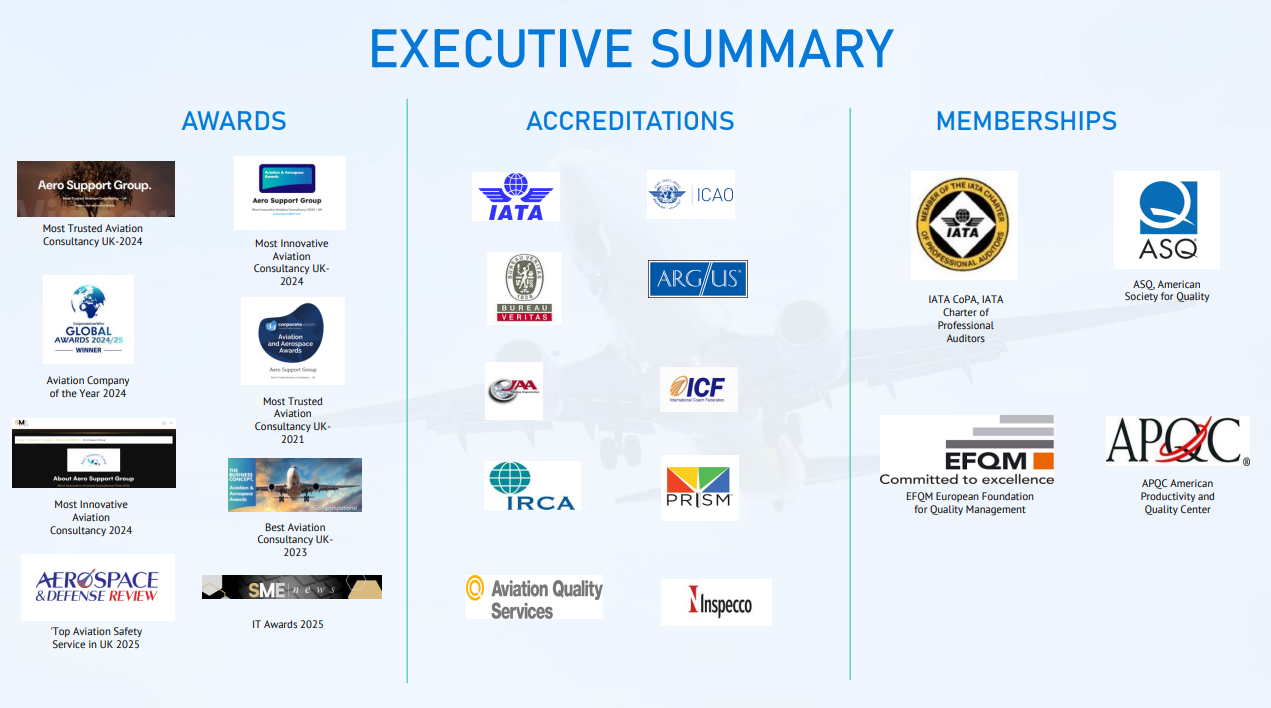 |
for airlines and aviation organizations preparing for IOSA audit preparation, ISAGO implementation,
EASA TCO consultancy, UK CAA TCO approval, EASA Part-145 consulting,
ICAO USOAP consulting, and risk-based compliance consulting.
Our approach focuses on regulator-ready evidence, practical implementation, and sustainable performance improvement.

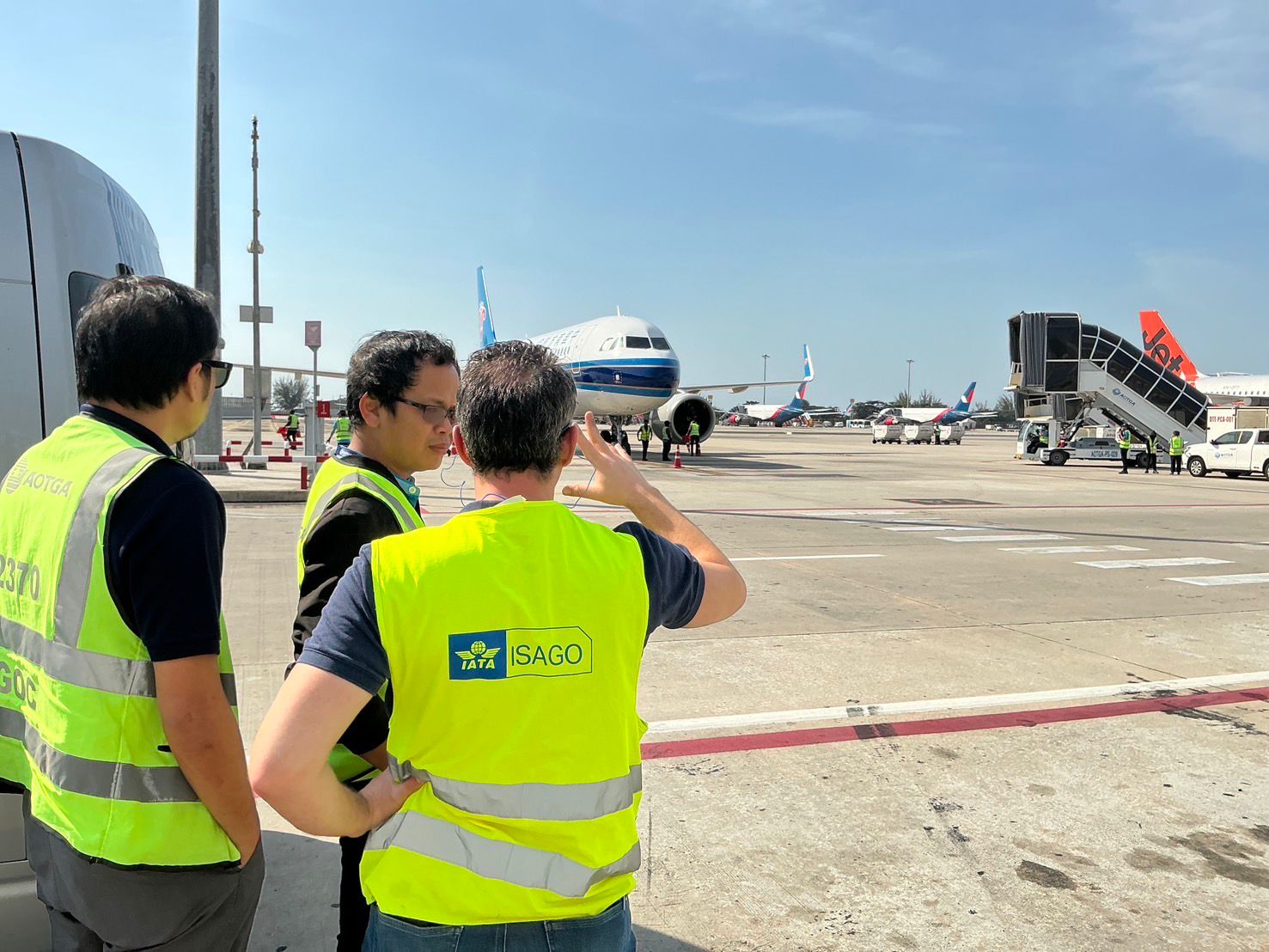
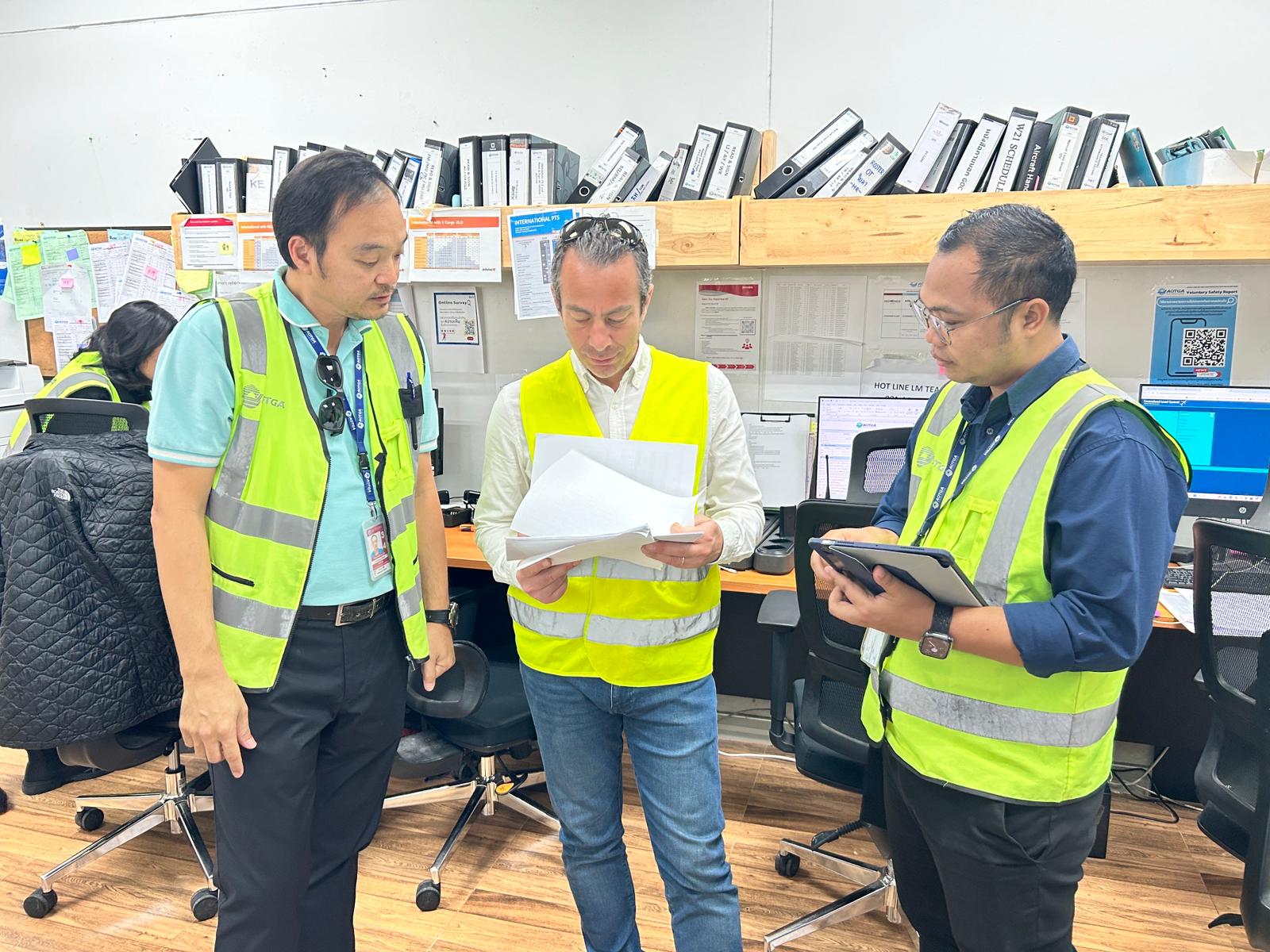
Preparing for IOSA, ISAGO, EASA TCO, UK CAA TCO or Part-145 approval?
Our aviation consultants support airlines and aviation organizations worldwide with regulatory compliance,
safety management implementation and successful international certification approvals.
Our Aviation Consulting Services
Explore Aero Support Group aviation safety consulting and aviation compliance support services. Each service below links to the relevant page for full scope and deliverables.
✈️ IOSA Audit Preparation Risk-based IOSA readiness support including gap analysis, documentation alignment, evidence mapping and full audit preparation aligned with IATA IOSA standards.
|
🛫 ISAGO Implementation ISAGO implementation and ground operations compliance consulting aligned with IATA IGOM standards and operational safety best practices.
|
🇪🇺 EASA TCO Consultancy EASA Third Country Operator authorization consulting supporting regulatory compliance, documentation preparation and authority coordination.
|
🇬🇧 UK CAA TCO Approval UK CAA Third Country Operator authorization consulting including regulatory readiness, documentation alignment and oversight preparation.
|
🛠️ EASA Part-145 Consulting EASA Part-145 maintenance organization consulting including MOE development, compliance monitoring systems and approval readiness.
|
📄 Part-145 Organization Approval End-to-end consulting for establishing and obtaining EASA Part-145 maintenance organization approval.
|
🌍 ICAO USOAP Consulting ICAO Universal Safety Oversight Audit Programme consulting supporting civil aviation authorities with audit readiness and CAP implementation.
|
📊 Risk-Based Compliance Consulting Risk-based compliance monitoring and aviation safety oversight frameworks designed to improve regulatory performance and audit outcomes.
|