
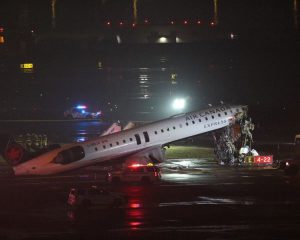
Runway Incursion Remains a Global High-Risk Category — What EASA, ICAO and IATA Are Signalling
Runway incursion is not a legacy issue that the aviation industry has already solved. The latest signals from EASA, ICAO, and IATA point in the same direction: runway safety still demands executive attention, stronger operational discipline, better cross-stakeholder coordination, and more effective use of safety data.
For airlines, airports, ANSPs, ground handling organisations, vehicle operators, and regulators, this is an important message. Runway incursion should not be treated only as an isolated operational event or a local procedural deviation. It should be treated as a high-risk safety management issue requiring structured reporting, trend monitoring, interface control, and evidence-based mitigation.
In practical terms, the current direction from EASA, ICAO and IATA shows that runway safety must increasingly be managed as a safety intelligence and safety performance topic, not only as a compliance checklist item.
Related Aviation Compliance Topics
If you are strengthening runway safety controls, SMS maturity, or regulator-facing compliance readiness, these related pages may also be useful:
Why Runway Incursion Still Matters
Runway incursions remain important because they sit at the intersection of multiple operational interfaces: flight crew actions, ATC communications, airport surface movement control, vehicle access, signage and markings, low-visibility procedures, local discipline, and organisational learning.
That means the problem is rarely limited to one department or one procedural step. In many cases, the real weakness lies in how information is shared, how interfaces are controlled, how precursor events are reviewed, and whether management action is taken before a serious event occurs.
From Isolated Events to Safety Intelligence Signals
One of the most important practical messages behind current runway safety discussions is that incursions should not be seen only as isolated events. They are increasingly understood as safety intelligence signals showing where barriers, coordination, communication, or operational discipline may be weakening.
This is why modern SMS expectations matter. Mature organisations should not only record runway-related events. They should analyse them, identify precursor patterns, review control effectiveness, and act before a high-severity outcome occurs.
ICAO: Runway Incursion Remains a Global High-Risk Category
ICAO continues to identify runway incursion as one of the key global high-risk categories of occurrence. This is a strong regulatory and strategic signal. It confirms that runway incursion remains a global aviation safety priority rather than a localised or secondary issue.
ICAO’s wider direction on safety management also reinforces this point. The shift toward safety intelligence, structured analysis, and performance-based safety management means runway-related risks should increasingly be monitored through data, trends, management review, and operational learning.
IATA: Runway Incursion Remains an Active Industry Safety Issue
IATA continues to treat runway safety as a major operational concern and keeps runway incursion within that focus. The practical value of this message is important: the industry is not only concerned with counting events after they happen, but with understanding whether the existing barriers are actually preventing escalation.
This is where tools such as GAPPRI become relevant. They provide a useful framework for reviewing local controls, but they also create a clear expectation that operators, airports, and service providers should test their own systems and not assume that documented procedures alone are sufficient.
EASA: Further Runway Safety Action Is Still Needed
EASA’s safety messaging continues to reinforce that runway safety remains a live priority. The European direction shows clearly that runway-related risk should not be seen as only an ATC problem, only an aerodrome problem, or only a flight operations problem. It is a system-level safety issue requiring coordinated action.
For operators and airports, this means runway safety should already be visible in management review, operational feedback loops, occurrence analysis, and interface risk assessments. Waiting for a major event before acting is no longer a credible strategy.
What practical questions should organisations ask?
In practical terms, aviation organisations should ask harder questions about whether their runway safety controls are producing useful results:
- Are runway-related hazards clearly identified and regularly reviewed?
- Are hotspot risks, low-visibility controls, and vehicle access arrangements actively monitored?
- Are occurrence reports analysed for trends and precursor patterns?
- Are lessons learned shared across flight operations, aerodrome operations, ATC, handlers, and contractors?
- Are management reviews focused on barrier effectiveness rather than only event summaries?
- Can the organisation demonstrate evidence that corrective actions reduced the risk?
These questions help reveal whether runway safety is only documented or truly managed.
Why This Matters for SMS and Safety Intelligence
Runway incursion should increasingly be seen as a safety intelligence topic. It is influenced by operational interfaces, human factors, reporting culture, communication quality, and local control arrangements. This makes it highly relevant to modern SMS expectations.
A mature Safety Management System is not demonstrated only by policies or occurrence forms. It is demonstrated by the organisation’s ability to identify precursor events, aggregate safety data, analyse trends, review barrier performance, and support timely management action.
Runway Incursion Is an Interface Risk
Many runway safety failures emerge at interfaces rather than inside one isolated department. That includes interfaces between:
- flight operations and air traffic control,
- airport operations and vehicle operators,
- airline crews and aerodrome procedures,
- ground handling providers and apron or taxiway access controls,
- safety departments and accountable management decision-making.
This is why runway incursion risk requires integrated review. Organisations that assess only departmental compliance often miss the actual points where operational breakdowns occur.
What Aviation Organisations Should Do Now
To align with the direction signalled by EASA, ICAO and IATA, aviation organisations should review whether runway safety is truly managed through performance, intelligence, and operational evidence. A practical review should cover:
1. Hazard Identification
Confirm that runway-related hazards, hotspot issues, vehicle access risks, low-visibility concerns, and phraseology-related risks are clearly identified and reviewed.
2. Reporting and Data Review
Assess whether occurrence reports, precursor events, and local observations are collected, aggregated, and analysed for trends rather than simply archived.
3. Barrier Effectiveness
Review whether procedures, markings, briefings, access controls, and communication safeguards are functioning effectively in real operations.
4. Interface Risk Management
Evaluate how operator, airport, ANSP, handling, and vehicle-related interfaces are managed, coordinated, and monitored.
5. Safety Governance
Ensure that management review processes use runway safety information for real decision-making, prioritisation, and follow-up rather than only for recordkeeping.
6. Evidence of Effectiveness
Be prepared to show evidence such as hazard logs, risk assessments, occurrence analysis, trend reviews, meeting outputs, corrective action tracking, and implementation records.
Runway Safety and Regulatory Readiness
One of the biggest implications of current runway incursion messaging is regulatory readiness. Authorities, auditors, and external assessors increasingly expect organisations to demonstrate that safety management is active, measurable, and embedded in real operations.
In practical terms, the question is no longer only whether the organisation has runway safety procedures. The question is whether the organisation can show that it identifies runway risks, analyses relevant data, reviews barrier performance, and uses that information to reduce operational exposure.
Final Thoughts
Runway incursion remains a global high-risk category because the industry still faces the same structural pattern: a known threat, multiple actors at the operational interface, and repeated opportunities for communication, coordination, or control breakdown.
For airlines, airports, ANSPs, handlers, and regulators, the message from EASA, ICAO, and IATA is straightforward: runway safety still deserves executive attention, stronger safety intelligence, better performance monitoring, and disciplined operational follow-up.
FAQ: Runway Incursion
What is a runway incursion?
A runway incursion is generally understood as an incorrect presence of an aircraft, vehicle, or person on the protected area of a runway. It can create a serious collision risk if not controlled quickly and effectively.
Why is runway incursion still considered high-risk?
It remains high-risk because it can escalate rapidly into a high-severity event and often involves multiple operational interfaces, including ATC, flight crews, airport operations, ground vehicles, and local procedures.
Why does runway incursion matter for SMS?
It matters because runway incursion is a good example of a safety management issue that must be identified, analysed, monitored, and controlled through data, governance, reporting, and management action.
What should an organisation review first?
A good starting point is to review runway-related hazards, occurrence reporting quality, precursor trends, hotspot controls, interface risks, and whether management review processes are driving real action.
Need support with runway safety, SMS maturity, or regulator-ready implementation evidence?
Aero Support Group supports airlines, airports, MROs, ground handling organisations, and aviation service providers with runway safety reviews, SMS gap assessments, SPI development, safety intelligence support, regulatory evidence preparation, and practical compliance implementation.
Follow Our LinkedIn Newsletter
Subscribe to our LinkedIn newsletter for weekly aviation safety, compliance, and regulatory insights covering runway safety, ICAO, EASA, IATA, IOSA, ISAGO, SMS, Part-145, TCO, and operational best practices.
Our Aviation Consulting Services
Explore Aero Support Group aviation safety consulting and aviation compliance support services. Each service below links to the relevant page for full scope and deliverables.
🛫 Runway Safety & SMS Support Practical support for runway safety reviews, SMS effectiveness checks, safety intelligence improvement, and operational evidence mapping.
|
🇪🇺 EASA TCO Consultancy EASA Third Country Operator compliance consulting supporting documentation readiness, SMS evidence alignment, and regulator-facing implementation.
|
🛡️ SMS Consulting Safety Management System consulting supporting hazard reporting, assurance, performance monitoring, governance, and integrated compliance.
|
🌍 Aviation Compliance Support Regulator-ready compliance support covering aviation audits, oversight systems, CAP development, and implementation evidence structuring.
|
Aviation Safety Consulting and Compliance Support
At Aero Support Group (ASG), we support airlines, MROs, ground handling organisations, airports, ANSPs, and aviation service providers worldwide with runway safety reviews, SMS gap assessments, ICAO Annex 19 implementation support, EASA TCO and UK CAA TCO support, IOSA and ISAGO readiness, Part-145 compliance support, safety performance indicator development, dashboard design, and regulator-facing evidence preparation.
Need support with runway safety, safety intelligence, or regulatory readiness?
Our aviation consultants support organisations worldwide with practical, audit-ready solutions for runway safety improvement, SMS maturity development, performance-based monitoring, data analysis capability, governance improvement, and regulator-facing implementation evidence.