

-
ICAO Annex 19, 3rd Edition, for Airlines: What Changes in Your SMS
- November 8, 2026
- Posted by: admin
- Category: Uncategorized
No Comments
What Annex 19, 3rd Edition, changes in an airline SMS from 26 November 2026: applicability, interfaces, resources, safety performance and the new State SMS assessment.
-
ICAO Annex 19, Doc 9859 & Doc 10159 | Effective SMS Consulting
- May 14, 2026
- Posted by: admin
- Category: Services
-
ICAO Annex 19 Amendment 2: What Changes for Your SMS on 26 November 2026
- April 8, 2026
- Posted by: admin
- Category: Uncategorized
Annex 19 Amendment 2 applies from 26 November 2026. The 11 SMS changes for service providers, who now needs an SMS, and what States will check.
-
IATA 2025 Safety Report: What Aviation Leaders Must Know
- April 5, 2026
- Posted by: admin
- Category: Uncategorized

The IATA 2025 Safety Report reveals 394 fatalities across 51 accidents in 2025. Discover what aviation operators and safety managers must act on now.
Aviation Safety
By Ferhan Bugay, Executive Director, Aero Support Group | 5 April 2026 | 10 min read
By Ferhan Bugay, Executive Director, Aero Support Group | 5 April 2026 | 10 min read
Released on 9 March 2026, the IATA 2025 Safety Report documents a sobering paradox: fewer total accidents than in 2024, yet 394 fatalities — nearly double the five-year average of 198. For aviation safety managers, compliance leaders, and organisations preparing for IOSA, EASA TCO, or ICAO USOAP oversight, the findings of the IATA 2025 Safety Report represent far more than historical data — they define the risk landscape every aviation organisation must navigate in 2026.
51
Total Accidents in 2025
394
Onboard Fatalities
8
Fatal Accidents
1.32
Accidents per Million Flights
38.7M
Flight Sectors Analysed

Source: IATA 2025 Annual Safety Report — released 9 March 2026. The report documents a significant divergence between accident frequency and fatality outcomes.
IATA 2025 Safety Report: The Global Performance Snapshot
The IATA 2025 Safety Report presents findings across 38.7 million flight sectors operated by IATA member airlines and beyond. The all-accident rate of 1.32 accidents per million flights represents an improvement over 2024’s rate of 1.42, but sits slightly above the 2021–2025 five-year average of 1.27 — a reminder that progress, while real, is fragile.
Eight fatal accidents occurred in 2025, exceeding both 2024’s seven and the five-year average of six. But it is the fatality count — 394 lives lost on board — that defines the story of 2025 aviation safety. This figure is nearly double the five-year average of 198, and represents a 61% increase over 2024’s 244 onboard fatalities.
The IATA 2025 Safety Report also documents one genuinely encouraging achievement: zero Loss of Control — Inflight (LOC-I) accidents for only the second time in aviation history (the first being 2020). LOC-I has historically been the deadliest single accident category, and its elimination from the 2025 record reflects decades of investment in Upset Prevention and Recovery Training (UPRT), advanced flight envelope protection, and systemic safety improvements in airline operations.
Accident Rate
1.32/million flights (5-year avg: 1.27) — marginal improvement over 2024’s 1.42
LOC-I Achievement
Zero Loss of Control — Inflight accidents for only the 2nd time in history
High-Severity Risk
Two accidents — Air India 171 & PSA Airlines 5342 — caused 77% of all 2025 fatalities
The Accidents That Shaped 2025: What the IATA 2025 Safety Report Documents
No analysis of the IATA 2025 Safety Report is complete without understanding the two events that dominated its fatality statistics.
Air India Flight 171 — 12 June 2025, Ahmedabad: A Boeing 787-8 Dreamliner crashed 32 seconds after takeoff, killing 241 of the 242 persons on board and 19 people on the ground. India’s Aircraft Accident Investigation Bureau (AAIB) preliminary report identified that both engine fuel control switches were moved from RUN to CUTOFF seconds after liftoff, causing total loss of thrust. The investigation — involving India’s AAIB, the US NTSB, and Boeing — is ongoing.
PSA Airlines Flight 5342 — January 2025, Washington Reagan National: A regional aircraft on approach collided with a US Army Black Hawk helicopter, killing all 67 occupants of both aircraft. This accident has refocused global attention on airspace management, military-civil coordination, and safety risk assessments in busy terminal environments.
Together, these two accidents account for over 305 of the 394 fatalities documented in the IATA 2025 Safety Report. While statistically driven by two singular events, the report’s deeper message is structural: global aviation safety performance remains highly vulnerable to the consequences of individual high-impact failures, particularly when systemic safety barriers — including SMS risk assessments, operational oversight, and infrastructure safeguards — are insufficient.
Runway Safety: The Persistent Risk Profile in the IATA 2025 Safety Report
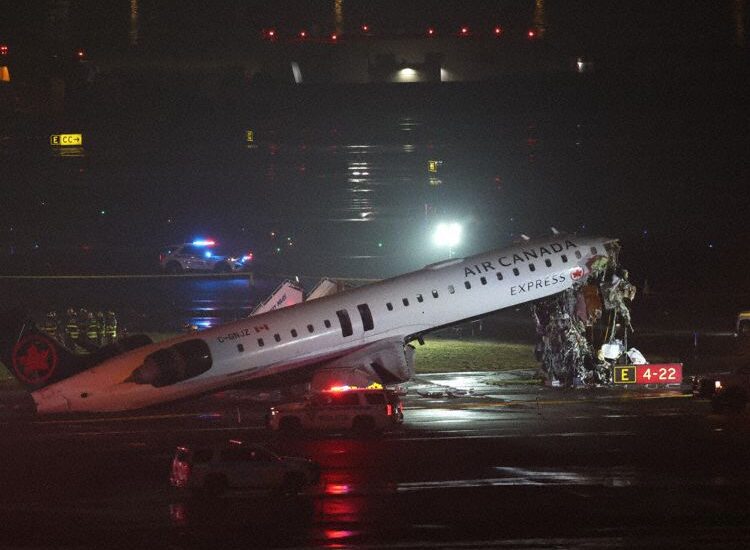
For the second consecutive year, the IATA 2025 Safety Report identifies runway excursions, tail strikes, and landing gear events as the most frequent accident categories. Runway excursions — events where an aircraft departs the runway surface during landing or takeoff — represent the single largest share of reported accidents and remain a critical focus of global aviation safety programmes.
The Global Action Plan for the Prevention of Runway Excursions (GAPPRE) remains the primary industry framework for addressing this risk through both technical and procedural mitigations. IATA’s commitment to GAPPRE is explicitly referenced in the safety report’s action priorities for 2026.
One of the most operationally significant findings of the IATA 2025 Safety Report is that airport infrastructure contributed to 16% of all accidents in 2025. Rigid structures near runway safety areas — including lighting installations, approach aids, and fixed obstacles — were identified as factors that transformed otherwise survivable runway excursions into fatal events. The report explicitly calls on airports, national civil aviation authorities, and regulators to continuously review compliance with ICAO Annex 14 obstacle limitation surface standards and Runway End Safety Area (RESA) dimensions.
For Safety Management System operators, the infrastructure finding carries significant SMS governance implications. Airlines operating into airports with substandard runway safety infrastructure have both a regulatory and ethical obligation to conduct formal safety risk assessments before commencing or continuing operations. Hazard logs must actively capture airport infrastructure-related risks, and operational risk assessments should be refreshed when new infrastructure data emerges.

Runway excursions remain the most frequent accident category according to the IATA 2025 Safety Report, with airport infrastructure contributing to 16% of all accidents recorded.
IOSA Risk-Based Auditing: What the IATA 2025 Safety Report Means for Audit Readiness
The IATA 2025 Safety Report coincides with a landmark transformation in the IOSA audit programme. In 2025, IOSA completed its full transition to a risk-based audit methodology, with registration renewal audits now performed exclusively by IATA-trained, risk-qualified auditors. This evolution means that audit scopes are no longer standardised — they are tailored to each individual operator based on their operational profile, historical safety events, and exposure to the safety risks identified in IATA’s Safety Issue Hub (SIH).
The safety risks documented in the IATA 2025 Safety Report directly inform the IOSA risk pictures used to scope future audits. Airlines in regions or operational profiles with elevated runway excursion exposure, for instance, can expect heightened audit focus on their runway safety programmes, approach briefing standards, and go-around policy implementation. The report findings also signal increased auditor attention on:
- SMS maturity and evidence of safety performance monitoring at senior leadership level
- Human Factors programme integration with operational safety systems
- Airport infrastructure risk assessments within the operator’s route safety evaluation framework
- Flight Data Monitoring (FDM/FOQA) programme effectiveness and data-driven decision-making
- Safety Risk Assessment (SRA) processes at flight planning stage (per IOSA Standard DSP 3.2.8C)
For airlines preparing for IOSA registration renewal, IOSA audit preparation in 2026 means demonstrating not just documented compliance but operational effectiveness — traceable, auditable evidence that safety management is influencing real decisions, not sitting in a binder.
What the IATA 2025 Safety Report Means for Each Aviation Organisation Type
Airlines & Commercial Operators
Airlines must benchmark their SMS against the risk patterns in the IATA 2025 Safety Report — specifically runway excursions, tail strikes, and engine-related risks. Operators pursuing EASA TCO or UK CAA TCO authorisation should treat the report findings as a lens through which regulators will evaluate compliance posture, particularly around SMS implementation evidence and safety performance indicators.
Maintenance Organisations (MROs) — EASA Part-145
While the IATA 2025 Safety Report focuses on operational accidents, EASA Part-145 organisations must recognise that oversight authorities increasingly expect maintenance SMS to actively capture and manage safety risks — not function as a standalone compliance module. The 2025 findings reinforce the expectation that compliance monitoring and safety management must operate as integrated systems.
Ground Handling Organisations — ISAGO
Airport infrastructure contributing to 16% of 2025 accidents directly implicates ground operations safety. ISAGO-registered ground handlers should review whether their airside safety risk assessments adequately capture proximity risks near runway environments, and ensure ramp near-miss data is integrated into SMS frameworks consistent with the IATA 2025 Safety Report recommendations.
Civil Aviation Authorities — ICAO USOAP
For national CAAs subject to ICAO USOAP evaluation, the IATA 2025 Safety Report provides benchmarking data that directly informs State Safety Programme (SSP) and Acceptable Level of Safety Performance (ALoSP) setting. Regulators should use the runway safety findings to strengthen their own safety oversight functions and airport certification standards under ICAO Annex 14.
IATA 2025 Safety Report: 6 Actions Aviation Organisations Must Take Now

Translating IATA 2025 Safety Report findings into concrete SMS and compliance actions is the defining challenge for aviation safety leaders in 2026.
1
Review Your SMS Hazard Register Against 2025 Accident Patterns
Cross-reference your hazard log with the accident categories from the IATA 2025 Safety Report — runway excursions, tail strikes, engine control risks. Ensure your risk register is current, evidence-linked, and actively reviewed by your Safety Review Board (SRB) with documented outcomes.
2
Conduct a Runway Safety Programme Gap Assessment
Assess whether your runway safety programme aligns with GAPPRE recommendations and ICAO Annex 19, 3rd Edition safety management requirements. Identify gaps in approach briefing standards, performance calculations, contaminated runway procedures, and go-around policy implementation.
3
Strengthen SMS Evidence for IOSA and Regulatory Audits
Under the risk-based IOSA framework, auditors evaluate SMS effectiveness, not just documentation. Ensure your Safety Performance Indicators (SPIs), SRB minutes, and hazard investigation records are audit-ready, traceable, and demonstrate that management is making decisions based on safety data.
4
Formally Assess Airport Infrastructure Risks on Your Route Network
For each airport in your network, document infrastructure-related risks — including RESA adequacy, obstacle proximity, and ICAO Annex 14 compliance status. Integrate findings into your operational risk assessment process and route approval framework, particularly for high-frequency routes into constrained airport environments.
5
Update and Integrate Human Factors Programmes with SMS
IATA’s Safety Strategy for 2026 prioritises Human Factors programme development integrated with SMS — a direct response to the systemic causal factors identified in 2025 accidents. Review your CRM, Non-Technical Skills (NTS) training, and occurrence investigation processes to ensure human factor causation is systematically captured and addressed within your SMS framework.
6
Engage Your Regulator Proactively — Using the Report as a Framework
Whether you are subject to EASA TCO, UK CAA TCO, or ICAO USOAP oversight, demonstrating awareness of — and a structured response to — the IATA 2025 Safety Report findings builds regulatory confidence. Proactive engagement, supported by evidence of internal action, is increasingly central to audit readiness in 2026.
Conclusion: From IATA 2025 Safety Report Data to Operational Action
The IATA 2025 Safety Report is a diagnostic tool for the global aviation safety community. Its findings — 394 fatalities, persistent runway excursion risk, airport infrastructure vulnerabilities, and an IOSA programme now demanding SMS operational effectiveness — define the compliance and safety challenge of 2026. The data is clear. What differentiates organisations that lead on safety from those that merely comply with it is whether insights from the IATA 2025 Safety Report are translated into structured, traceable, and verifiable operational improvements.
Organisations that treat the IATA 2025 Safety Report as a reference document — rather than an action agenda — risk falling behind both regulatory expectations and the operational safety standards their passengers, crews, and stakeholders deserve.
Aero Support Group works with airlines, MROs, ground handlers, and civil aviation authorities to translate regulatory findings into structured, evidence-based improvement programmes. If the IATA 2025 Safety Report has raised questions about your SMS maturity, IOSA readiness, or compliance posture, our consultants are ready to help.
Ready to Strengthen Your Aviation Safety & Compliance Posture?
Whether you need IOSA audit preparation, SMS effectiveness review, EASA TCO compliance support, or a runway safety gap assessment — Aero Support Group delivers expert, regulator-ready solutions.
Frequently Asked Questions — IATA 2025 Safety Report
What does the IATA 2025 Safety Report say about aviation fatalities?
The IATA 2025 Safety Report documents 394 onboard fatalities across 8 fatal accidents in 2025, significantly above the five-year average of 198. Two accidents — Air India Flight 171 and PSA Airlines Flight 5342 — accounted for over 77% of all 2025 fatalities, highlighting the severe impact of individual high-consequence events on global safety statistics.
What was the overall accident rate in the IATA 2025 Safety Report?
The IATA 2025 Safety Report records an all-accident rate of 1.32 per million flights, based on 51 total accidents across 38.7 million flight sectors. This is better than 2024’s rate of 1.42 but slightly above the 2021–2025 five-year average of 1.27, indicating that the overall safety trend remains broadly stable but not on a consistent downward trajectory.
What are the most common accident types in the IATA 2025 Safety Report?
The IATA 2025 Safety Report identifies runway excursions, tail strikes, and landing gear events as the most frequent accident categories for 2025, continuing the trend from 2024. Airport infrastructure contributed to 16% of all accidents, making physical airport environment safety a key focus area for both operators and regulators.
How does the IATA 2025 Safety Report affect IOSA audit preparation?
The IATA 2025 Safety Report directly informs the risk-based IOSA audit scope now fully operational from 2025. Auditors assess SMS maturity, runway safety programme effectiveness, and human factors integration based on current risk intelligence specific to each operator’s profile. Airlines must demonstrate operational evidence of safety performance — not just documented compliance — to succeed in IOSA audit preparation under the new methodology.
Was 2025 a good or bad year for aviation safety according to IATA?
The IATA 2025 Safety Report presents a mixed picture. On the positive side, fewer total accidents occurred than in 2024, and 2025 recorded zero Loss of Control — Inflight (LOC-I) accidents — only the second time this has been achieved in aviation history. However, fatalities at 394 were nearly double the five-year average, making 2025 a year of significant concern despite some genuine safety achievements.
About Aero Support Group
Aero Support Group (ASG) is an aviation safety, quality and compliance consultancy with offices in Dubai and Istanbul and a branch office in London. It prepares airlines, MROs, ground handlers, airports and civil aviation authorities for IOSA and ISAGO audits, EASA and UK CAA Third Country Operator (TCO) authorisation, EASA and FAA Part-145 approval, and ICAO USOAP audits.
Its work also covers Part-CAMO, Part-M and Part-147, Part-IS information security, SMS, QMS and SeMS development, gap analyses, mock audits and corrective action plans, operations manuals and MOEs, emergency response and business continuity planning, DAQCP, IFQP, JIG and IDQP inspection preparation, ACC3, RA3 and KC3 cargo security validation, CEIV Pharma, and SAF and CORSIA compliance.
ASG has completed 1,000+ projects at 500+ airports in 100+ countries. Its consultants have also served as subject matter experts, auditors and advisors for ICAO, IATA Consulting, IATA audit pools (IOSA, ISAGO, IDQP, IFQP), PRISM, ARGUS International and RSM.
References & Official Sources
- › IATA 2025 Safety Report — Official Press Release (9 March 2026)
- › IATA Annual Safety Report Executive Summary
- › IATA IOSA Risk-Based Audit Approach
- › ICAO Annex 19 — Safety Management (3rd Edition)
- › EASA European Plan for Aviation Safety (EPAS) 2026
- › SKYbrary — Runway Excursion
- › Air India Flight 171 — Accident Overview
Safety Management Systems
IOSA Consulting
ISAGO Consulting
EASA TCO
UK CAA TCO
EASA Part-145
ICAO USOAP
Contact ASG
IOSA Consulting
ISAGO Consulting
EASA TCO
UK CAA TCO
EASA Part-145
ICAO USOAP
Contact ASG
ASG
Aero Support Group
Global Aviation Consulting
Aero Support Group (ASG) is an aviation safety, quality and compliance consultancy with offices in Dubai and Istanbul and a branch office in London. It prepares airlines, MROs, ground handlers, airports and civil aviation authorities for IOSA and ISAGO audits, EASA and UK CAA Third Country Operator (TCO) authorisation, EASA and FAA Part-145 approval, and ICAO USOAP audits.
Its work also covers Part-CAMO, Part-M and Part-147, Part-IS information security, SMS, QMS and SeMS development, gap analyses, mock audits and corrective action plans, operations manuals and MOEs, emergency response and business continuity planning, DAQCP, IFQP, JIG and IDQP inspection preparation, ACC3, RA3 and KC3 cargo security validation, CEIV Pharma, and SAF and CORSIA compliance.
ASG has completed 1,000+ projects at 500+ airports in 100+ countries. Its consultants have also served as subject matter experts, auditors and advisors for ICAO, IATA Consulting, IATA audit pools (IOSA, ISAGO, IDQP, IFQP), PRISM, ARGUS International and RSM.
LinkedIn Newsletter
Subscribe to Global Aviation Safety Radar
Weekly aviation safety and compliance intelligence covering ICAO, IATA, EASA, and UK CAA developments — translated into practical implications for airlines, MROs, airports, ground handlers, and aviation leaders.